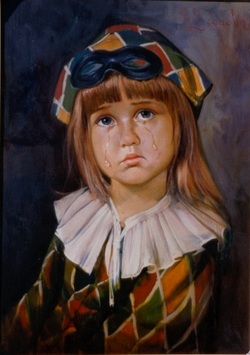
Tears for Fears
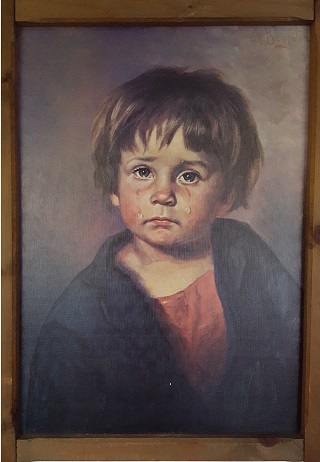
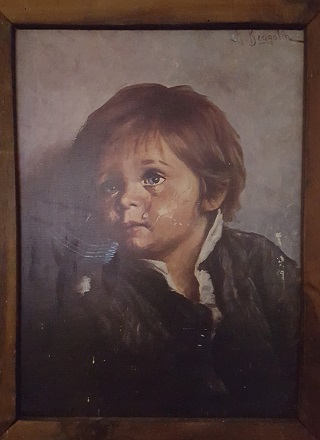
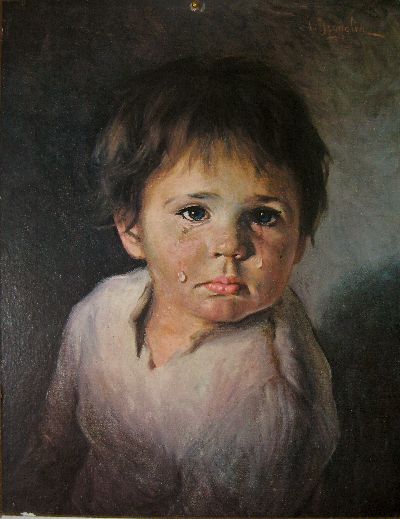
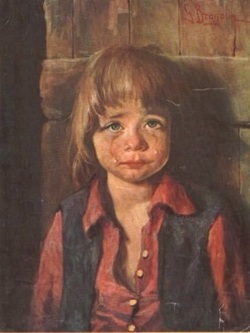
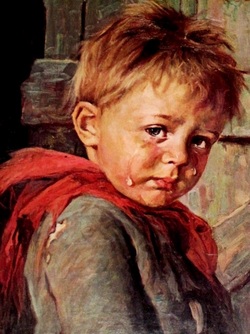
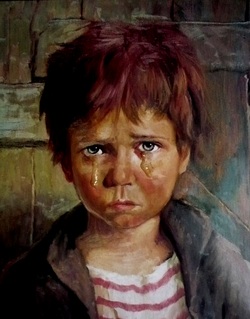
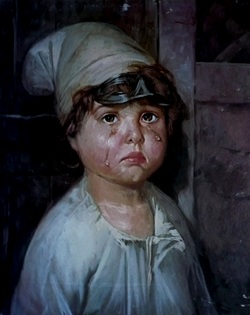
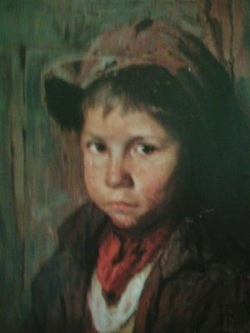
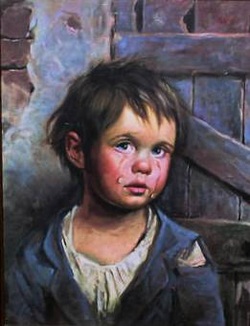
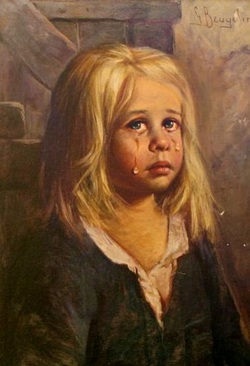
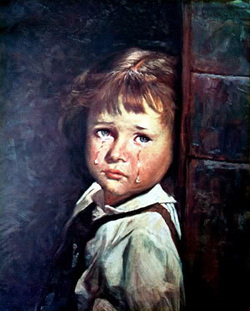
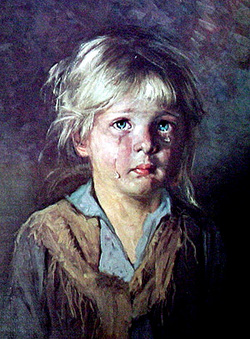
The most bizarre and enduring story of all is certainly the “Curse of the Crying Boy,” a story told in an article by David Clarke published in Fortean
Times (July 2008). It all started on September 4, 1985, when British tabloid newspaper The Sun published an article titled “Blazing Curse of the Crying
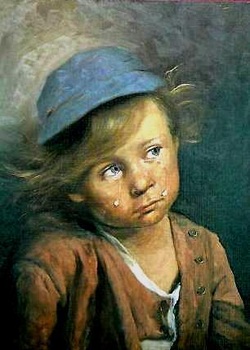
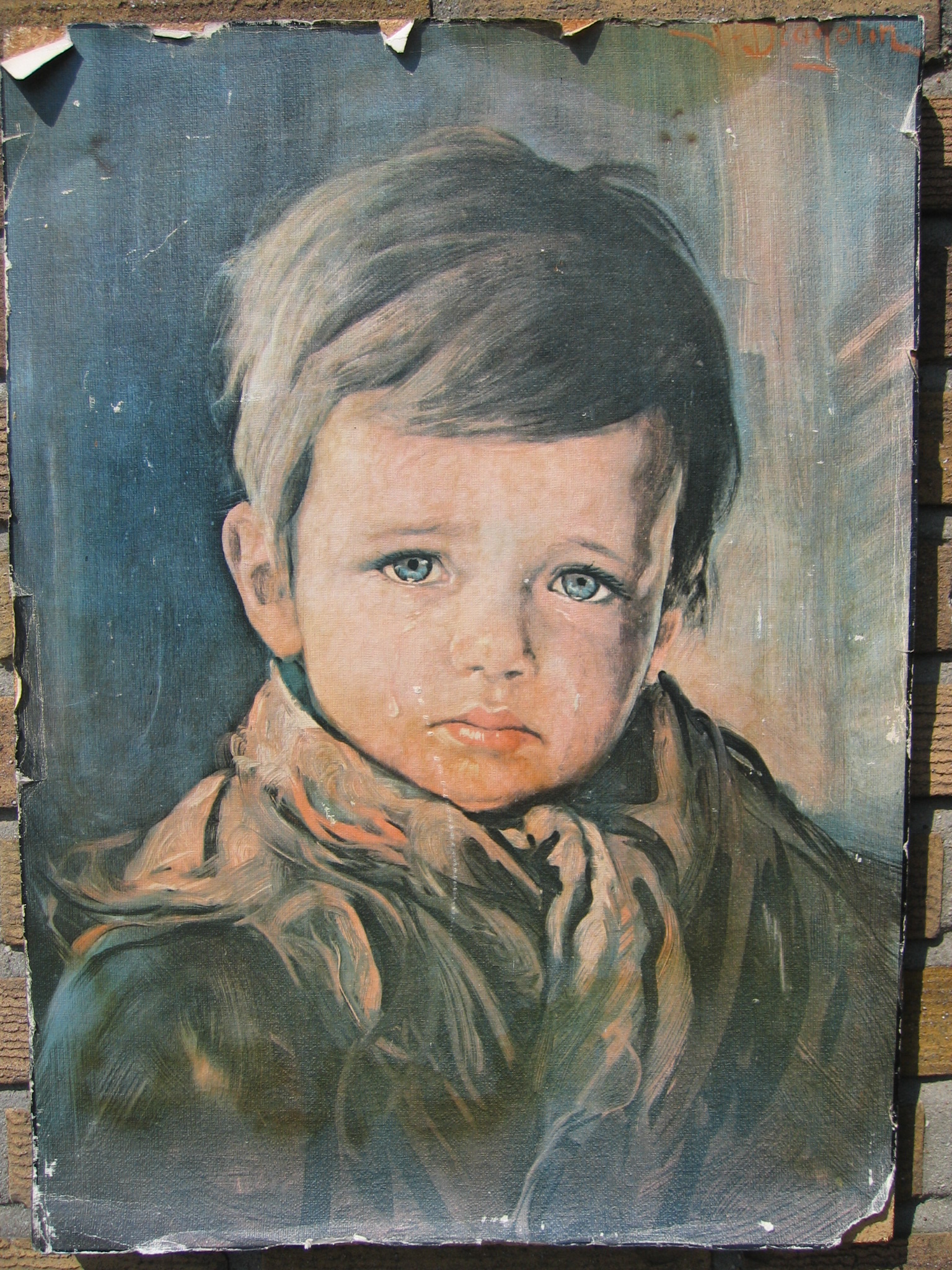
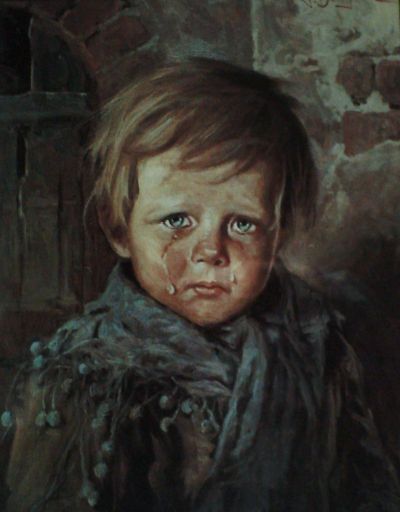
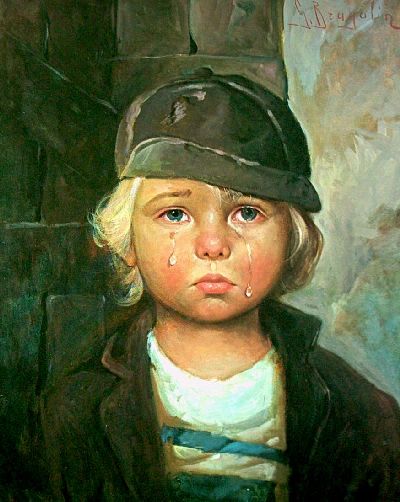
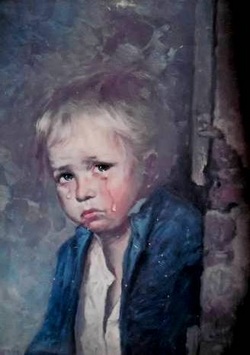
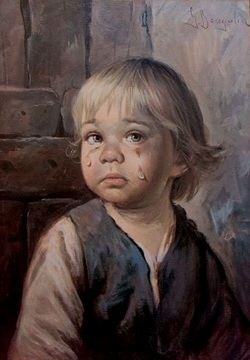
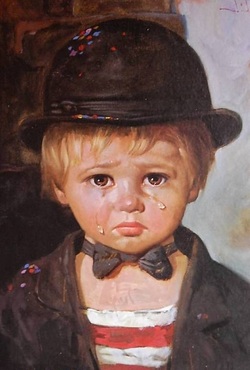
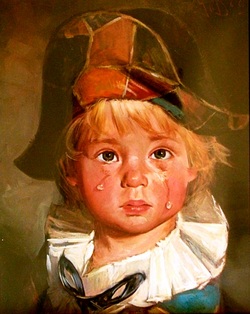
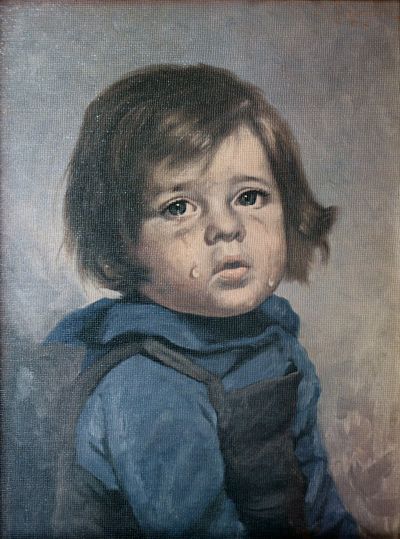
Boy.” It told of a couple who blamed a cheap painting of a child with big tears on his cheek for a fire that destroyed their house in Rotherham, South
Yorkshire. The fire broke out from a pan in the kitchen and spread rapidly. However, the framed print of the Crying Boy remained on the wall unscathed.
What made this mundane episode national news was the statement of a local firefighter who said that he knew of numerous other cases where prints of the
Crying Boy had turned up, undamaged, in the ruins of homes destroyed by fire. The Sun was soon inundated by letters telling of similar episodes and a
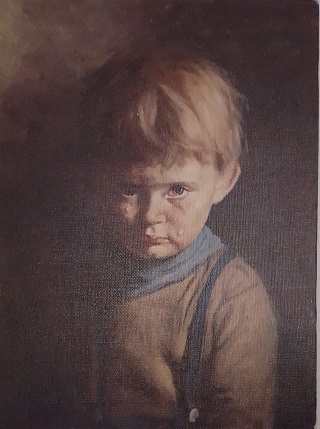
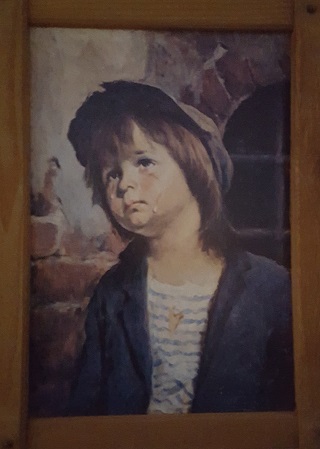
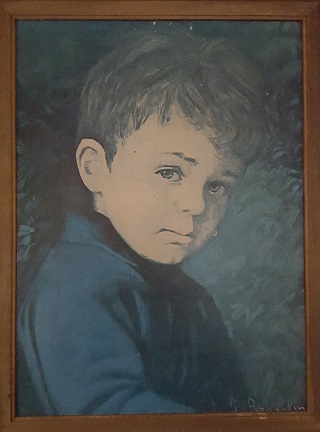
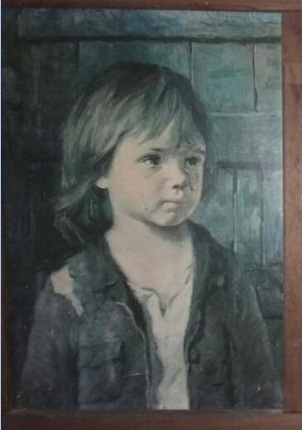
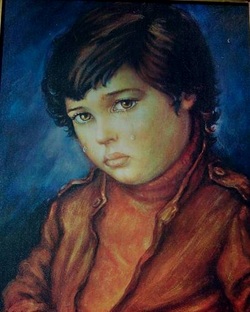
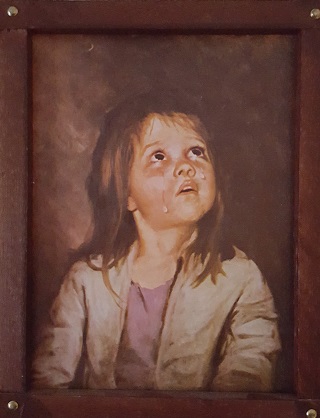
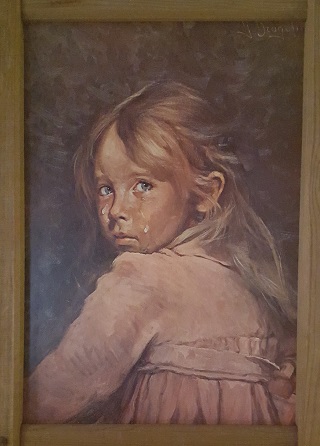
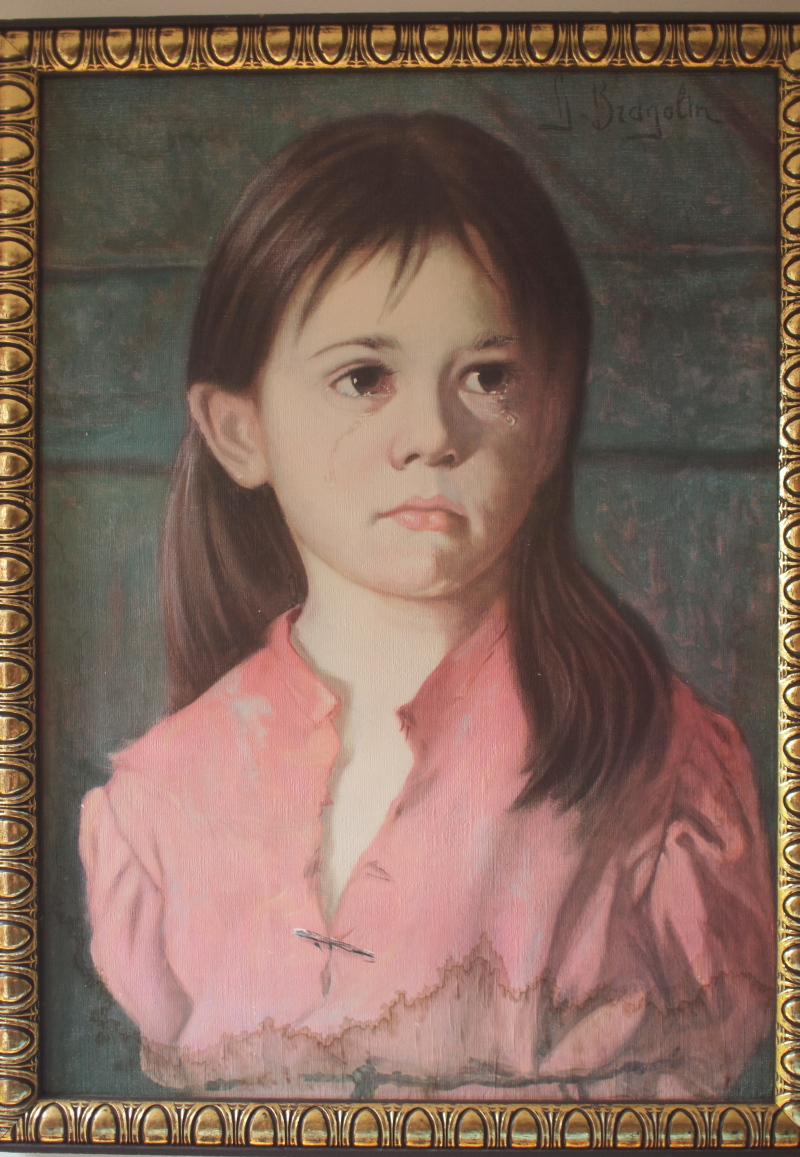
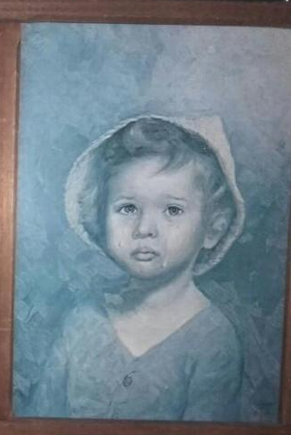
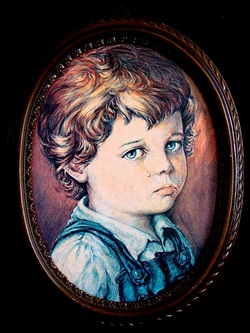
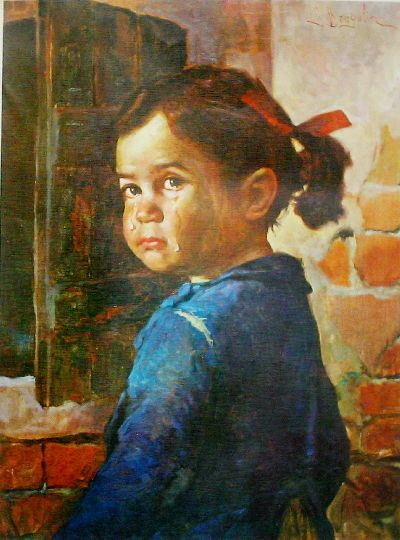
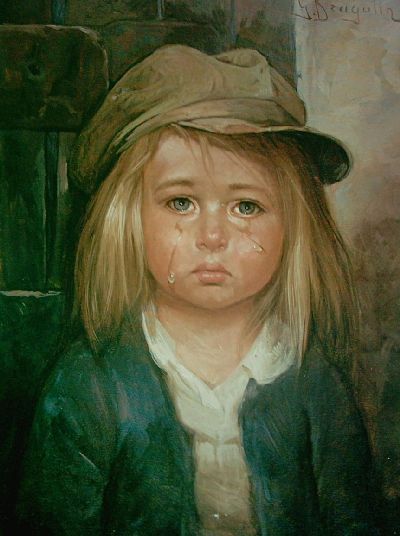
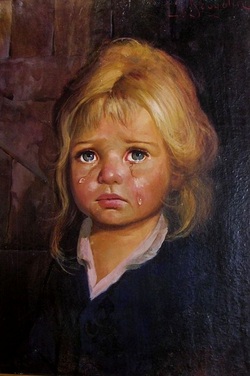
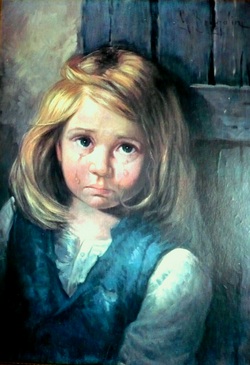
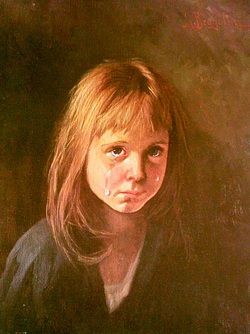
background story for the painting was soon established. First of all, not all paintings were identical. They all were kitschy prints of crying kids, sold
in tens of thousands of copies in branches of British department stores during the 1960s and 1970s.
The original painting that started the whole scare was signed G. Bragolin, which The Sun claimed was “an Italian artist.” Others stated that Giovanni
Bragolin was the pseudonym of a Spanish painter, Bruno Amodio, also known as “Franchot Seville.” Clarke reports that attempts to trace the man floundered
as art historians said he did not appear to have a “coherent biography.” Roy Vickery, the secretary of a British Folklore Society, was quoted by The Sun to
the effect that the original artist might have mistreated the child model in some way, adding: “All these fires could be the child’s curse, his way of
getting revenge.”
The hysteria grew so wide that the South Yorkshire Fire Service issued a statement dismissing the connection between the fires and the prints. It explained
that the most recent blaze was started by an electric heater left too close to a bed. “Fires are not started by pictures or coincidence,” stated Chief
Divisional Officer Mick Riley, “but by careless acts and omissions. The reason why this picture has not always been destroyed in the fire is because it is
printed on high-density hardboard, which is very difficult to ignite.” A bonfire of 2,500 copies of such paintings was even staged by The Sun in an attempt
to milk every last drop of sensationalism from the news story. After that, the number of tabloid stories began to fade, but the “curse” transformed itself
on the Internet into a modern urban legend.
The Legend of El Diablo
Today many people claim that if you treat the paintings well they bring good luck, while others say that if you hang close together the paintings of a
crying boy and of a crying girl the house will be protected by any possible danger.
In the end, “a well respected researcher into occult matters, a retired schoolmaster from Devon named George Mallory,” was said in the Clarke article to
have discovered the origins of the paintings. Mallory had been able to trace the actual artist who had painted the original, Franchot Seville (it was him,
then, who used as pseudonyms both Bruno Amodio and G. Bragolin). Seville explained that in 1969 he had found a little street boy wandering around Madrid.
The child never spoke and had very sad eyes. Seville decided to paint him, and a Catholic priest, looking at the painting, identified him as Don Bonillo, a
child who had run away after seeing his parents die in a blaze. The priest then warned Seville to stay away from Bonillo for wherever he went mysterious
fires would break out: the villagers even called him “El Diablo” because of this. Seville ignored him and adopted the boy, using him as his constant model.
The paintings sold well but when the studio was destroyed by a fire, the painter accused the child of arson. Bonillo ran away and was never seen again.
Only many years later the victim of a car crash was identified as nineteen-year-old Don Bonillo.
In fact, no one named George Mallory, Franchot Seville, or Don Bonillo ever existed. But it doesn’t matter, the legend of the curse of the Crying Boy is
alive and well, just like the paintings that would not die.
The Real Life Painter
In the winter of 2009, I was finally able, by chance, to trace the real artist who had painted the Crying Boy series. He was Italian and his name was Bruno
Amadio (not “Amodio”). His neighbor Antonio Casellato of Trebaseleghe, near Padua, read an article I wrote about this story in an Italian magazine and
sent me a letter. “I knew Amadio very well. I lived in the house next to him for ten years and after his death I have bought his home and all that was in
it.”
I called Casellato and learned more about Amadio. “He was a marvelous person, always smiling and kind,” Casellato told me.
He was a true artist and taught at the Academy of Venice. His painting style was of very high quality. I own many of his paintings and they are beautiful.
That’s why I am sorry that he is remembered just for the Crying Boys. That was something that he painted just because it sold well [today original copies
of Crying Boys can reach $3,500]: as good as an artist may be, it is very rare that he can live in affluence. So, since they kept asking him for those
paintings from all over the world, he obliged and painted them. But he did so reluctantly, that’s why he used a pseudonym, “Bragolin.” Do you want to know
were that name came from? His uncle, who had worked in vaudeville, used it and had given him permission to adopt it.
In 1981, at age seventy-three, Amadio died of disease of the esophagus and the legends broke out. “Some time ago,” added Casellato, “a Swedish journalist
came here. He was interested in filming a documentary. He was convinced that Amadio had been a poor child and that he always painted the same subject in
the hope to save other children from poverty. He went away depressed when I told him the truth. That’s all; I just wanted to say that Bruno Amadio was a
real person and not the fictional character of some unlikely urban legend.”
story © http://www.csicop.org/si/show/curse_that_painting/